It’s England, 1783.
When the rich and beautiful Sovay isn’t sitting for portraits, she’s
donning a man’s cloak and robbing travelers—in broad daylight. But in a
time when political allegiances between France and England are strained,
a rogue bandit is not the only thing travelers fear. Spies abound, and
rumors of sedition can quickly lead to disappearances. So when Sovay
lifts the wallet of one of England’s most powerful and dangerous men,
it’s not just her own identity she must hide, but that of her father.
(Goodreads)
Genre: historical, adventure
Rating: 3/5
I can't tell you how confused this book made me feel in whether I liked it or not. On the front some of the adventure was fun and enjoyable, but on the other hand everything felt very rushed and thrown together. One minute Sovay was acting as a bandit, the next minute there was a spy ring, the next minute Illuminati are going to sacrifice her. I felt like yelling at the author to slow down and maybe pick just one plot. Men are thrown around as possible love interests, then the actual love interest is introduced at the very end. Sovay is gifted with unbelievable luck in some circumstances, so much so that it starts to stretch the imagination. There's also the issue that the book leads you to believe that it's about a girl becoming a highwayman. That is actually very little of the subject. Most of it involves Sovay trying to find her brother and father (one of whom just shows up without her help eventually) and a few chapters at the beginning dealing with the handful of robberies Sovay actually did (lo and behold one happened to uncover the very papers that Sovay needs to help save her family).
So there's the dilemma. The book isn't poorly written like some, but the plot is so all over the place I couldn't actually bring myself to really get on board with it. Maybe if it hadn't tried to do so much I would have enjoyed it just as much as the other French Revolution novels I read, but as it stands, this one was one of the more disjointed efforts.
Showing posts with label historical. Show all posts
Monday, July 23, 2012
Sunday, July 22, 2012
Revolution by Jennifer Donnelly
BROOKLYN: Andi Alpers
is on the edge. She’s angry at her father for leaving, angry at her
mother for not being able to cope, and heartbroken by the loss of her
younger brother, Truman. Rage and grief are destroying her. And she’s
about to be expelled from Brooklyn Heights’ most prestigious private
school when her father intervenes. Now Andi must accompany him to Paris
for winter break.
PARIS: Alexandrine Paradis lived over two centuries ago. She dreamed of making her mark on the Paris stage, but a fateful encounter with a doomed prince of France cast her in a tragic role she didn’t want—and couldn’t escape.
Two girls, two centuries apart. One never knowing the other. But when Andi finds Alexandrine’s diary, she recognizes something in her words and is moved to the point of obsession. There’s comfort and distraction for Andi in the journal’s antique pages—until, on a midnight journey through the catacombs of Paris, Alexandrine’s words transcend paper and time, and the past becomes suddenly, terrifyingly present.
(Goodreads)
Genre: historical; contemporary issues
Rating: 4.5/5
What seems like a time traveling historical fiction is actually more a study of grief than anything else. Andi feels responsible for the death of her younger brother and spends her time dealing with a mother who can't function and taking enough pills to keep her from committing suicide. Andi is deliberately sinking her future, alienating everyone around her, and refusing any help offered to her. When her father misguidedly thinks getting her off to Paris will help, she finds the diary of a girl long dead who lived during the Revolution. Researching Alexandrine's tragic story and the befriending of a nice young man who refuses to be put off by her slowly starts to get through to Andi that maybe she doesn't want to die. Maybe there's a way to not move on, but at least make room for the pain and forgive yourself.
Andi isn't likable. Her family isn't really either as her father doesn't understand her love for music and how it keeps her sane. Even Alexandrine isn't all that likable as her motivations are for fame, ending with her realizing what she's done to get to that point and who she's sold her soul to. But while they aren't all that likable, they're realistic. It's a bit of a stretch that Andi goes to such a ritzy school and the whole time travel bit at the end felt like a bit of a speed bump in the smoothness of the plot, but the book is a very thoughtful look at pain, grief, guilt, and music.
Wednesday, July 11, 2012
The Pale Assassin by Patricia Elliott
Set during the French
Revolution, this novel about a teen aristocrat who must question the
justice of her own wealth while facing the cataclysmic divisions of her
society is sure to captivate readers as secrets come out, sympathies
shift, and every choice can change--or end--life.
(Goodreads)
Genre: historical
Rating: 4.5/5
Keeping more in the spirit of The Scarlet Pimpernel than anything else I've ever read, The Pale Assassin sets itself up as the start of a series and doesn't slow down for air. Eugenie is the spoiled daughter of a disgraced aristocrat and finds herself and her brother caught in the middle of the French Revolution. With her brother trying to rescue the king and her nefarious, dangerous fiancee after her, she is desperate to hide in and finally leave France. Realizing that the revolution really has solved nothing, this novel does a pretty fair job of offering up the motivations of both sides, acknowledging that the idea for revolution was not the problem, just the taking of it to the extreme.
Eugenie was spoiled but functional. The only real problem I had was that her romance at the end sort of came out of nowhere. Thankfully it's not dwelt on, but she goes from hating the boy to suddenly having feelings for him within a chapter. Her brother's story line is unresolved, which makes it clear this is to be a series as well as her main nemesis never being caught. This is the rare book where neither the male of female lead is all that equipped to deal with what they are thrown in to and I appreciate the fact that Julian was just as much out of his depth as Eugenie even if he was the "smart" one of the two. In all this was a surprisingly good adventure novel with a good deal of mystery and an excellent set up for a series.
Friday, July 6, 2012
Scaramouche by Rafael Sabatini
Once he was André-Louis
Moreau, a lawyer raised by nobility, unconcerned with the growing
discontent among France’s lower class—until his best friend is
mercilessly struck down by a member of the aristocracy. Now, he is
Scaramouche. Speaking out against the unjust French Government, he takes
refuge with a nomadic band of acting improvisers where he assumes the
role of Scaramouche The Clown—a comic figure with a very serious
message...
(Goodreads)
Genre: historical
Rating: 4/5
Challenge: European Reading Challenge
If you think this book is going to have a linear plot like The Scarlet Pimpernel, you'd be wrong. Scaramouche is from a distinctly French perspective, with Andre-Louis actually helping with the revolution before everything goes to madness. This is more a novel about a man with a nemesis, that nemesis being Gervais de La Tour d'Azyr, the man who killed Andre-Louis' best friend and attempted to marry the woman Andre-Louis was secretly (even to himself) in love with and who debauches the woman Andre-Louis was planning on marrying. These two men dance around each other attempting to strike the death blow until the shocking twist at the end.
Andre-Louis isn't perfect like Percy is in The Scarlet Pimpernel. He's headstrong and stubborn and refuses to see reason much of the time. He's also vain and hotheaded and fairly imperious. He's also not really concerned with the greater purpose. Yes he involves himself in politics, but not heavily. He is an actor for a while before parting company in a truly spectacular manner. He becomes a master swordsman. There seems to be nothing Andre-Louis isn't good at to the point of being ridiculous. The French Revolution is also viewed in a more sanitary light than how books like The Red Necklace and The Scarlet Pimpernel use it. The Red Necklace doesn't concern itself with the Revolution until the very end as a convenient plot point. The Scarlet Pimpernel uses the Terror as the main feature, with everyone in danger of getting guillotined. Scaramouche uses the Revolution as a political statement, with Andre-Louis standing by his support of the cause until the radicals take over. Even the aristocrats are able to escape the Terror easier than any of the other French Revolution novels I've read. Older teens may like this novel. It's not as easy to read as The Scarlet Pimpernel, but once it's gotten into, the action is fast paced enough to keep attention.
Saturday, March 31, 2012
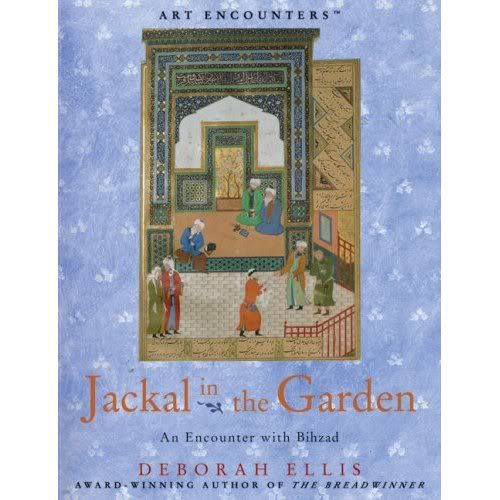
Jackal in the Garden by Deborah Ellis

Anubis refuses to die. She was left in the desert at her birth because she is horribly deformed, but she survives and grows up hidden from the world. After her mother's death, she is forced to again return to the desert, where after many wanderings, she meets artist Bihzad and his colony of artistic friends. Interacting with kind and cruel people, Anubis realizes that being a scholar doesn't always make you wise and that her looks really have no control over who she is.
Genre: historical
Rating: 4.5/5
Other: What an Animal Challenge
This is part of a series of books made to involve art and historical artists. You never know what you're getting into when it comes to series trying to follow some sort of theme and using lots of different authors, but much like the fairy tale updates series, this novel at least, was successful in its own right. Anubis is a tough, intelligent, very gender neutral voice who doesn't necessarily compliment the famous people around her. She points out Bihzad's flaws and doesn't exactly forgive him for them. He and his friends could have stepped in several times to save her, but they don't either because they are cowards or because they don't want to upset the balance of everything. The book also does a decent job of trying to explain Persian art as well as it can. Ellis has always seemed to have an understanding of that part of the world and she doesn't fail in this attempt either. She made a sympathetic but strong character in Anubis. This is a good bit of world YA historical fiction.
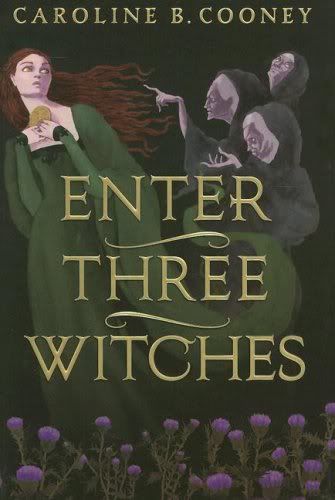
Enter Three Witches by Caroline B. Cooney

Mary, daughter of the Thane of Cawdor, is a privileged but neglected member of Macbeth's household. That all changes when her father is found to be a traitor to the king and she is now cast at the mercy of whatever man wants to claim her and her lands. But there are more pressing matters going on in Scotland as the king is soon murdered and his sons blamed. Macbeth is made king, but the court starts to raise suspicions as Macbeth's actions seem more and more questionable. Mary finds herself trapped and unable to get away as events spiral into a final battle between Macbeth and those he has wronged.
Genre: historical
Rating: 5/5
Many books that try to take a different angle on a Shakespeare play end up either being boring or unrealistic. This book was neither because the character chosen to follow fit in so well. There was also a lot of focus on servants, who seemed to know everything that was going on, and a court that is well aware that something is not right about Macbeth's stories. The witches of the title hardly play a part at all while playing a huge part since they're the ones that trigger all the events.
Mary was an interesting character as she starts out timid and weak, but as things start falling apart around her, her sense of self preservation kicks in and she starts being quite a survivalist in the chaos going on around her. I'm not sure how many students would be interested in reading a companion to Macbeth, but it's a good one.
Wednesday, March 14, 2012
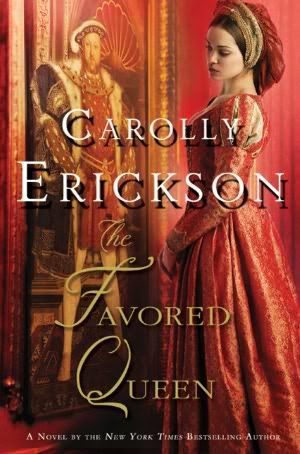
The Favored Queen by Carolly Erickson

Kind lady in waiting Jane Seymour is caught in the middle of the messy marriage of Catherine of Argon and Henry VIII. She is completely loyal to the queen and resents Anne Boleyn's machinations and scheming. Jane's own life is in limbo as her father ruins her chances of a good marriage, then she realizes being wrapped up in life at court has left her without much means of being married off. As time goes on, Henry's relationship with Anne sours and Jane finds herself earning the king's favor. While Henry isn't exactly what Jane had in mind for a husband, she desperately wants children and is now considered an old maid. Despite her misgivings, she marries the king and becomes the new hope for a male heir.
Genre: historical
Rating: 4/5
I find Erickson's books enjoyable for the most part and I understand she makes it very clear she takes a lot of liberties with history, but for some reason that still bothers me somewhat no matter how good the writing. Erickson also has a tendency to dwell on the shortcomings of the historical men her books feature. Napoleon is portrayed as an outright villain while Henry is shown as a coward, womanizer and heartless. I'm not saying either man was a paragon of virtue, but I'm not sure one can simply paint them as horrible people. I mean the main characters marry these men after all, so it's hard to portray a sympathetic and intelligent female character who still marries these men. It's just not explained well enough. Erickson is an excellent writer and while I could do without the random made up affairs every woman lead has in every Erickson book I've read, her novels are infinitely readable. They're almost taken better as just well written romance novels though.
Friday, March 9, 2012
The Secret Life of Josephine by Carolly Erickson

Raised in the Caribbean and forced into a marriage that brings her only unhappiness, Josephine cuts a unique and striking figure in Paris. Managing to survive the French Revolution in spite of coming terribly close to being killed, she, known as Yeyette to her family, makes conquests of men and uses her mercenary talents to be a supplier of goods to the military. Earning the attention of a military man on the rise in Napoleon Bonaparte, she reluctantly agrees to marry him to provide her children with benefits and herself with security. After having other lovers, Yeyette finds that she's earned Napoleon's wrath and becomes the target of his cruelty.
Genre: historical
Rating: 3/5
I preface this by saying I read and liked other work by Erickson. Her novels are engaging. That being said I just didn't like this one. I think the largest problem I had was that too many historical liberties were taken and some of the characters were extremely one note. Much of the book is well researched, but for narrative sake, characters and romances were added and perhaps the biggest problem for me was that Napoleon became a one note villain. I'm not saying Napoleon was any sort of saint and that he was an excellent husband, but I am saying that I'm aware enough of the history to know that Napoleon and Josephine remained friends even after he divorced her. Yes, his attitude toward her changed after he found out she was unfaithful, but from what I've read her attitude towards him changed into appreciating him afterwards even though he was now unfaithful. In this book he's set up as a villain that Josephine is trying to overthrow more than anything else. I was aware that liberties were taken with some of Erickson's other novels, but it just felt like way too much here. There came a point that while it was a well written book, there was just too much glaringly not historically accurate that it became distracting to me.
Tuesday, February 28, 2012
Dust and Shadow by Lyndsay Faye

When London is struck by notorious killer Jack the Ripper, of course the world's most famous consulting detective Sherlock Holmes is called in. Sherlock finds himself in a difficult position when the killer proves just as crafty as he is and the residents of Whitechapel are led to think that Sherlock might actually be the killer. Faced with inept police work, hysteria, injuries and being framed, Sherlock is forced to tax his strength to the limit and call in the charming, down on her luck Miss Monk to help him.
Genre: mystery, historical
Rating: 3/5
This book. I'm not sure why I didn't like it. I didn't dislike it, I just felt sort of bored by it. The author did a good job trying to fit the Ripper murders with Sherlock mythology, but I don't know. Maybe it was too many iconic things trying to be fit together, like Bigfoot and the Loch Ness monster being shoved in a movie together. Part of it might be that Sherlock seems smarter than how he's presented here, but he HAS to not know what's going on to fit into the Ripper mythology. The addition of a female was just sort of blase to me. She was the requisite spunky and intelligent and probably necessary to the story, but nothing about anything in the book really grabbed me. Maybe I'm burned out on Sherlock Holmes stuff, but while this was all serviceable enough and there was really nothing wrong with it, there was really nothing that stood out to me either.
Tuesday, February 21, 2012
Hearts of Stone by Kathleen Ernst

In the aftermath of the Civil War, Hannah and her siblings are left alone when their mother dies. Faced with being split up or trying to find relatives in Nashville, the family heads out only to find themselves in dire straits in the city with nowhere to go. Hannah is plagued by doubts about whether she is doing the right thing by her siblings and is strapped with trying to protect them. She is also filled with regret about her relationship with a neighbor boy Ben, whose father was a Rebel while Hannah's was a Union soldier. Slowly losing more and more family possessions and faced with starving to death, Hannah has to decide how to save what's left of her family.
Genre: historical
Rating: 5/5
The immediate aftermath of the Civil War is something I don't often see dealt with in books. It always seems like the war ends and suddenly everything is fine for all the characters in the book. This book deals strictly with the affects of the war on families back at home. Tennessee specifically had a very strange place in the war as many men actually became Union soldiers and there was much Union support in some places. The awful conditions for civilians after the war is generally ignored in novels, specifically YA ones. This is a refreshing filling in of a piece of an ignored space of history. There is no fighting mentioned, just the plight of refugees who don't know what's happened to their families and who have no where to go.
Hannah is a tough young woman thrust into a role that she shouldn't have to handle, but who has no other options. She struggles to make up her mind about certain things and is nagged by doubt that she's doing the right thing, but she acts to try to keep her family together and is strong during tragedy. She has to sacrifice her strict code of what is right and wrong to feed her family, but doesn't do so easily. This is a well written book about a blank space in YA historical fiction.
Saturday, February 18, 2012
A Beautiful Blue Death by Charles Finch

Victorian gentleman Charles Lenox is something of hobbyist detective. When his close friend Lady Jane asks him to investigate the murder of a former servant, he sets out with his valet Graham, his doctor friend, and eager to help brother, Charles sets about trying to untangle the mystery while delicately treading around his nemesis Inspector Exeter and a lot of aristocratic and wealthy gentlemen who may not want this case solved. Add to that the fact that the home that the murder took place happens to be where the treasury was storing gold for the mint and Charles has his hands full.
Genre: mystery, historical
Rating: 5/5
There's nothing not to like about this charming mystery. With a detective pleasantly upper class possessing the mind of a Sherlock Holmes, though more inclined to miss a clue now and then, Lenox and his friends are just likable. I made the mistake of looking at Amazon reviews before writing my own, something I try not to do, and was rather surprised by all the complaining about historical mistakes in the book. I didn't notice anything so terribly glaring that I couldn't enjoy the mystery part. One of the things I think reviewers tend to forget (and I do it as well) is the genre of book they're reviewing. If this were a historical novel I might have been harder on it, but it's a mystery and never pretends to be anything other than that. And it was a charming mystery that was far more readable and unpredictable than most and the characters were actually likable themselves. Lenox's brother Edmund was also a pleasant change from distant or snooty upper crust siblings in books by eagerly delighting in helping his brother. Everything is neatly answered, but not so neatly concluded, as Lenox makes a few errors that lead to not everyone being punished quite like they possibly should be. This was just a nice mystery.
Friday, February 17, 2012
Compass in the Blood by William E. Coles Jr.

Ambitious college freshman Dee has written a prize winning essay about the strange case of Katherine Soffel, a wife and mother who, at the turn of the century, apparently fell in love with one of the convicts in the prison where her husband was warden and who helped him and his brother escape only to be gunned down. Dee has questions about the case and when she gets an opportunity from a known tv journalist to possibly locate Soffel's diary, she jumps at it. But suddenly Dee finds herself out of her depth. Dead end after dead end keep presenting themselves on the quest for the diary location and Dee finds herself questioning her idol's ethics as well. Suddenly the case looks a lot murkier than even Dee originally imagined.
Genre: historical, suspense
Rating: 4/5
This books was as much about how research is done as it was about the admittedly interesting case of Katherine Soffel. There are a lot of strange aspects to the actual case which the author handily draws on to make his own argument that there was something more than the newspapers presented in the original events. Dee is an intelligent girl and she finds herself torn in finding what she wants by unscrupulous means like her mentor Harry, or whether there is a line of ethics to be drawn, even for the dead. Dee and her friends are believable, even if Dee's boyfriend is a bit of an anomaly for this type of book and his plot line seemed forced in. There was enough going on without his artwork becoming a plot thread that really didn't seem to go anywhere.
The case itself is fascinating. Why would a woman risk her life for a man then both of them deny having a relationship? Why would the escape attempt have been so odd? Why would her husband have acted in such a strange manner? The newspapers had a free hand in painting Soffel as a vampire woman who had obscene desires, but the information doesn't seem to add up. The main flaw of the book is that it can't give a solid answer. The group stops short of reading the actual diary, leaving the ending open to interpretation.
Thursday, February 16, 2012
The Desires of Her Heart by Lyn Cote

Forced to move to Texas because of her father's terrible financial decisions, Dorritt finds herself the only one in the group being able to make logical decisions until they come across tracker Quinn, who immediately finds himself drawn to Dorritt's sensibility. Plunging deeper and deeper into Texas, Dorritt finds herself being more willing to stand up to her bully of a step father and attracted to Quinn, whose background makes him unsuitable. When Dorritt is kidnapped, she suddenly has to decide exactly what she wants out of her life.
Genre: historical, romance
Rating: 4/5
I preface this review by saying I was shocked when Lyn Cote responded to my last review of one of her other books, in particular because she was so gracious when I REALLY did not like the main character of the book and made that known. She's a good writer and I'd already started reading another of her books in hopes that my reaction would be more favorable. It was, albeit I still had some character issues, but some of them were resolved by the end.
First off, I was afraid Dorritt was going to fall in the same category of female character I hate as she backed down all the time in every confrontation, but eventually her character started taking charge and surprisingly tells off some people. Quinn wasn't really that interesting to me, but two minor characters in Ash and Reva were. I'd read a book just about them. In fact, a lot of the secondary characters were interesting to me. Dorritt's family were one dimensional though. Her father was horrible with no redeeming qualities, her sister a spoiled brat and her mother passive to the point of being catatonic. Dorritt actually develops as a character believably and this makes for a fairly enjoyable historical romance.
Sunday, February 12, 2012
Queen of Shadows by Edith Felber

Welsh orphan Gwineth as promised her family that she will avenge the ravaging of her homeland by ruining Edward II. Working as the handmaid to his neglected queen Isabella she finds herself sympathizing with the woman and loathing the many indignities Edward and his ruthless favorite Hugh Despenser subject her to. But Isabella is no weak woman and soon starts her own affair with Roger Mortimer, leaving Gwineth torn between her own safety and overthrowing the weak willed king.
Genre: historical
Rating: 4/5
I've always felt a little for the She-Wolf of France. She got a raw deal. She was married off to a man who was by most accounts a homosexual who flaunted his affairs in front of his wife and whose favorite, Hugh Despenser was a horrible, power hungry villain. So I feel like she simply acted like a man in a man's world and has been vilified herself for it. So this was an interesting more sympathetic take on the queen. Probably more sympathetic than she actually was, but being honest that Mortimer was just as power hungry as Despenser was. I think the most telling thing about Isabella in history is that her son banished her and killed Mortimer, but didn't banish her that far away and by most accounts she lived a long, relatively content life. That speaks of someone whose son didn't quite see her as a total monster as she's been portrayed.
The book itself was well written, though Gwineth and Owen felt like rather flat characters. The real characters were far more interesting. The romance also felt bland as Owen really had no personality. Most of the action is centered on Isabella's life right before she rebelled against Edward II and the ending felt rushed because of it. It was a book that made me look more into Isabella and how she's been portrayed. She was an interesting woman who may have gotten a raw deal from history.
Thursday, February 9, 2012
The Last Wife of Henry VIII by Carolly Erickson

Moving in and out of the intrigues of the court of Henry VIII, Catherine Parr is a far more intelligent woman than most, though she had no desire to be involved in the snake pit of court politics. Widowed young then married for convenience to a boring man much older than herself, Catherine never has the children she deeply wants, but does find love with the slick and ambitious Thomas Seymour whose vying for power puts their love in danger if not their lives. Having attracted the attention of the aging Henry VIII, Catherine becomes an unlikely queen and is forced to deal with a husband who is paranoid and religious leaders who would like to see her head end up like that of previous wives. Surviving through her brains, Catherine finally is able to be with her beloved Thomas, but his interest in the princess Elizabeth threatens their happiness.
Genre: historical
Rating: 4.5/5
Catherine Parr was the only wife of Henry VIII to manage to stay married to him until his death, though not easily. There is plenty of documented history where she was very nearly assigned the same fate as her predecessors as her enemies at court tried to use Henry's paranoia to eliminate her. Catherine seemed to be impressively smart though, an author and theologian and capable of keeping her head in a poisonous atmosphere. The most interesting feature to what seemed like a smart woman for her time is her relationship with Seymour, a man who later was executed and who abandoned her during her pregnancy, which she died from by most accounts. He seems like an anomaly who she may have been infatuated with, as she was willing to risk the disapproval of court by marrying him a very short time after Henry's death. By most accounts she was in love with Seymour before the king showed interest and agreed to marry him more out of duty than anything else.
If Erickson takes liberties with her history, she can be given a free pass since Catherine is no where near as well documented as Henry's more famous wives, particularly the ones who lost their heads. Catherine is to be admired though, as a woman who was very much of her time and in some ways ahead of her time in regards to her learning.
Saturday, February 4, 2012
The Queen's Daughter by Susan Coventry

Joan is the daughter of Eleanor of Aquitaine and Henry II. She is often caught between the power struggle of her father, mother and various brothers, none of whom get along with each other. Joan herself tries to keep everyone happy, but she finds herself a political pawn of her parents and shipped off to a marriage that she does not want. Trying to live up to her mother's directions on being a good queen, Joan finds the odds stacked against her and can't shake her interest in a childhood friend for whom she had feelings. Forced to act or be devoured by the politics around her, Joan uses her intelligence to try to protect herself and maybe stand for who she really is.
Genre: historical
Rating: 4/5
This book proved to be surprisingly good. I never know what I'm getting into with YA historical fiction dealing with "princesses" because there's a tendency to romanticize things. I'm not saying this book DIDN'T take a lot of liberties, but it also kept a lot of reality to the plight of being a royal female used as a political game piece. Joan isn't a weak willed person, but she is living in a time when women simply didn't have many options, especially women born into power. Joan has much of the mentality to be expected from women of the time. She values strength more than kindness and despises her husband for being weak more than anything else. Her first marriage is tolerated and she is caught in the trap of having to go between a vindictive sister-in-law and a mother-in-law who recognizes her daughter's scheming. The conflict between Henry II and his sons is portrayed interestingly as well. Neither side is blameless and both groups of men have some seriously unlikable flaws. Richard, who is Joan's favorite brother, proves to be a bully and downright cruel to Joan when she defies him, yet no one sees this as odd as men of the time were expected to act no differently. Joan's second husband who she greatly loves has plenty of illegitimate children running around. This was the middle ages and things were different. The book is honest about that and interesting because of that.
I only don't give the book a higher rating because there was a LOT of liberty taken with history and the author admits it. Also Joan seems much older than she actually is. Even in the middle ages I don't think a 10 year old would talk and react to things like Joan does. Other than that, it's a highly enjoyable read.
Saturday, January 28, 2012
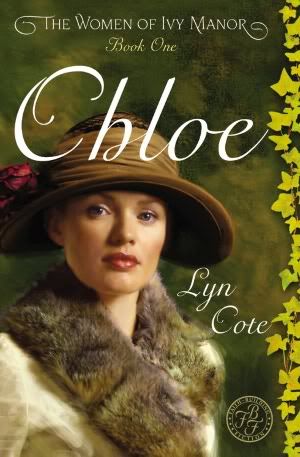
Chloe by Lyn Cote

Chloe Kimball is the pampered but unloved daughter of wealthy parents who looks for a way to break away from her parents who see her as nothing more than something to decorate their home. After meeting him for only a day, Chloe takes advantage of a marriage proposal to run away from home and start her own life in the chaotic life of the late teens and early twenties in New York. Leaving behind her old life and a friend who also proposed marriage, Chloe starts her own career and has a child, yet life continues to be a disappointment for her as he struggles to bond to her daughter and feels like a failure as a wife and mother. Taking up campaigning for her father she crosses paths with her old friend who has come home from the war with scars and refuses to talk to her any more. When the stock market crash comes, Chloe is left needing to sort her life out and find out where she belongs.
Genre: historical
Rating: 2/5
Ugh, I had so many problems with this book. I mainly finished it because the author actually is a fairly talented writer, but the main character is SO spineless I found it hard to have any sympathy for her. I suppose I could argue that this character type just doesn't "speak" to me, but she literally spent most of the book refusing to make choices and then berating herself for not making choices. She occasionally tries to take a stand on something, such as looking after her daughter, then immediately backs down when her obnoxious, over bearing shrew of a mother takes over and pretty much condemns Chloe for being a bad mother (because her mother would know, being a drunk who foisted her off on her grandmother when Chloe was growing up). She gets duped by her father again and again as he sees her as nothing more than a political pawn to be used accordingly. It's just hard to like a character who allows herself to be treated as a doormat, then is upset that she's treated like a doormat, THEN has other characters telling her how strong she is when SHE'S NOT.
And then there's Roarke, Chloe's love interest who, because the author wants to keep his reasoning for being hateful and bitter a secret until the end, is REALLY unlikable for most of the book because you don't understand his reasoning. He's just unpleasant and hateful to everyone and while he has reasons, they're literally not revealed until the last pages, making him obnoxious and unsympathetic for most of the book. The book itself was very readable, but the characters were just completely unsympathetic.
Saturday, January 21, 2012
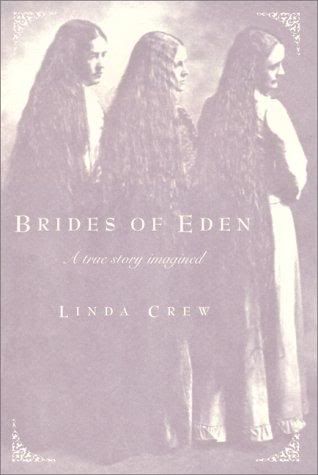
Brides of Eden by Linda Crew

Rural Oregon in 1903 does not seem the place where something as strange as a doomsday cult would happen, but that's before charismatic preacher Franz Edmund Creffield changes his name to Joshua and claims he is the second coming of Christ. His outrageous claims are bought into by many of the women in Corville and his strange message soon has his followers looked on with fear and anger in the town. As Joshua makes more demands of his followers, teenager Eva Mae finds herself torn between wanting to please Joshua and her overly pious sister and staying with her kind father. She's soon confused and swept up in events that spiral out of control and unsettle an entire community.
Genre: historical
Rating: 4/5
A YA novel based entirely on a turn of the century doomsday cult seems like an odd thing to find, but this book ended up being extremely fascinating. Eva Mae's confusion over her family and her own actions is entirely believable and she becomes very sympathetic, even if to the outside observer her actions are extremely frustrating as she keeps being seduced back into the cult. What is most interesting about this book is how modern cult leaders haven't changed from Joshua and his methods. He slowly separates the women from their families, doesn't allow them to interpret Scriptures for themselves, takes advantage of them sexually which in Eva Mae's case causes her to become even more confused and afraid to tell anyone. The book also has the benefit of having actual pictures from the town and primary sources sprinkled through it, as this was an actual event that the author researched. Overall a startlingly good book about a rather obscure topic.
Monday, January 16, 2012
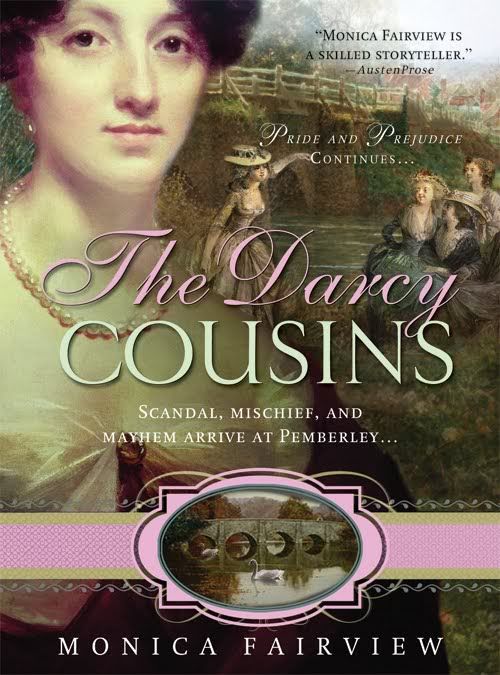
The Darcy Cousins by Monica Fairview

Trouble abounds for Georgiana Darcy when her lively cousin Clarissa comes to live with the family in England. Completely disregarding conventional society rules, Clarissa flirts and charms her way through society, leaving Georgiana in awe and wanting to copy her popular cousin. But as Georgiana starts to change to match Clarissa, she begins to wonder if maybe they're going too far and earns the attention of several men, some more deserving of her than others. Added to this is the curious case of Anne, who has completely disappeared from the domineering control of her mother, Lady Catherine.
Genre: historical
Rating: 4/5
I've read plenty of continuations of Pride and Prejudice, many of them not very good based on the fact they just feel like romance novels with the same characters. Fairview at least tries to keep with the original spirit of the characters, some with more success than others. The book itself has a strong enough plot line. The addition of other characters allows for more action than just leaving the same characters. Many of Bennetts are absent from the novel, as it focuses more on Darcy's extended family and focuses mainly on character that there was either little written about originally or original characters that the author can do what she wants with. This makes it a bit easier to buy into as a book and actually pretty enjoyable. The main complaints are that the book ends rather abruptly and the author makes the same mistake I've seen others make by having Elizabeth seem a bit more passive than she's originally written. I would expect Elizabeth to have a little more sass to her than the book allows. Other than that it is a pretty enjoyable book in its own right.
Saturday, January 14, 2012
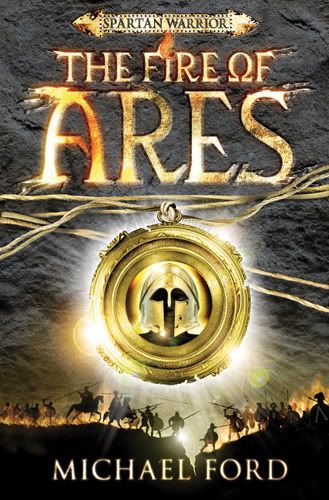
The Fire of Ares by Michael Ford

Lysander is a young helot slave in Sparta who finds that he is actually heir to a noble heritage. With his circumstances suddenly changed, he becomes a student at a training facility that will make him a Spartan warrior. Faced with prejudice and bullying, he questions just who he's loyal to, his Spartan background or his helot upbringing. In the midst of his struggles, he searches for a stone called the Fire of Ares that was stolen from him and connects him to his Spartan history.
Genre: historical
Rating: 4/5
Since 3o0, so often Spartans are shown in literature and movies as a group who was strong and warlike, but fair and noble. That is historically inaccurate. The Spartan culture was based entirely on being able to keep the number of slaves, who vastly outnumbered them, under control. Military training was mainly enforced out of fear of a slave uprising rather than drive for military excellence. This book does the service of telling the story from the point of a helot slave and being unflinching in its look at Spartan society. Yes there are a few nice Spartans, but overwhelmingly Lysander is confronted by prejudice and violence merely because he's a slave. The brutality of what Spartans demanded of their citizens is also shown. The plot was sometimes a bit contrived, but it maintained interest the whole way through and while the search for the missing stone felt a bit unnecessary, the book itself was extremely readable.
Subscribe to:
Posts (Atom)