Showing posts with label ya historical fiction challenge. Show all posts

Thursday, October 27, 2011

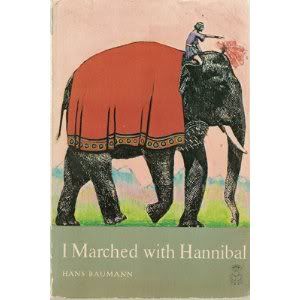
I Marched with Hannibal by Hans Baumann

Two children hear the story of Hannibal's attack on Rome from an elderly elephant driver. He tells of Suru, his loyal elephant who was the last elephant survivor of the campaign. He travels with the Carthaginians based on the belief that Rome was responsible for the destruction of his home city, yet while he rides along, he begins to question the blind hatred that both sides have towards each other and whether Hannibal is really the great leader that he thinks he is.

Genre: historical, throwback

Rating: 4/5

Notes: #8 of YA Historical Fiction Challenge

Yet another throw back. This one involves Hannibal's march over the Alps. Historically, this tends to get mentioned as an incredible feat that Hannibal did without any losses. In reality it was incredibly unsuccessful for the elephants and a spectacular waste of men driven by a man who hated Rome as much as Rome hated Carthage. This story doesn't shy away from the ruthless aspects of either empire. And the story mainly concerns itself with the elephants rather than the technical aspect of war. Suru is as much a character as anyone else in the novel and the human drama of surviving takes on a much more important tone than what Hannibal is actually trying to accomplish.

There is a nice parallel between what Hannibal is doing and what he criticizes his enemies for doing. In the end, he's no different from then and he causes just as much destruction, a cycle of hate that eventually ends in Carthage being completely destroyed.

Wednesday, October 12, 2011

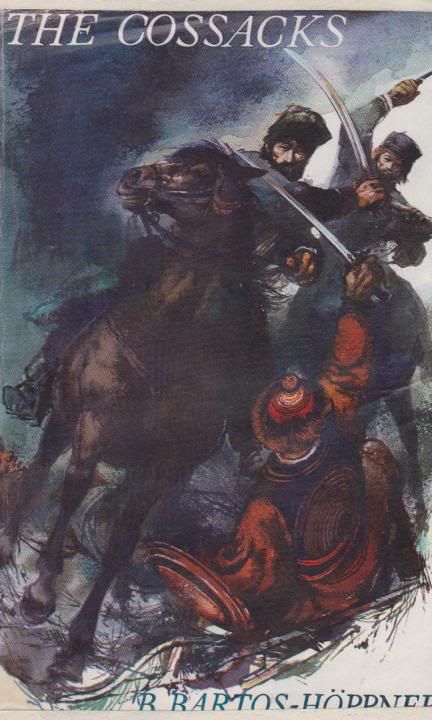
The Cossacks by B. Bartos-Hoppner


Mitya wants something more in his life than being trapped in the small Russian village he lives in. When Yermak, the great Cossack leader shows up in the village, he follows him for his chance to be something more than a poor trapper. What Mitya finds is that he is now a part of the first conquest of Siberia, a land cruel and wealthy. He finds a brotherhood in the crude band of Cossacks, but he never finds any joy in the killing and fighting that they do. As he begins to question the cycle of revenge and violence that take place between the Cossacks and the Tartars that they are fighting, Yermak's group is pushed to its limit in one of the most forbidding places on earth.

Genre: historical, throwback

Rating: 4/5

Throwback rating: 5/5

Notes: #7 of YA Historical Fiction Challenge

Again, historical fiction that is older doesn't have as much of a problem holding up under scrutiny most of the time. This book is the same. The most noticable thing might be the sort of stiff language the book uses, but there's also the fact that this book was originally written in German and translated, which may account for some of the stiffness. It also made it harder to connect to the characters because of the formality. Mitya is the only one you really feel any connection to, and he's sort of kept at arm's length because of the rigid writing. What makes the book worthwhile to me is the fact that it was written about an obscure historical subject. I've never seen anything fictional about the Cossacks, much less about the original invasion of Siberia. This is a very very strange subject for a YA novel to be written about, but I suddenly want an updated YA novel on the subject. For a history major, this was interesting and showed insight into a culture that most don't know much about. I honestly felt like someone could turn this into a great historical movie, as the novel was a fictionalized version of actual events. This was a strange topic, but so fascinating, I wish someone would expand on it.

Saturday, September 24, 2011

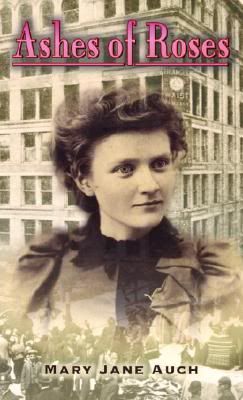
Ashes of Roses by Mary Jane Auch


Rose and her family have come from Ireland in search of a better life. Things get off to a bad start though when her younger brother is not allowed in the country and her family is split up again. Convincing her mother she needs to stay, Rose and one of her sisters continue on in America trying to make a living for themselves. After struggling to figure out how to live in their new country, Rose and her sister befriend a kind Jewish girl heavily involved in the union who gets Rose a job at the Triangle Shirtwaist Factory. Baffled as to her friend's dedication to the union, Rose tries to find her own spirit until tragedy strikes.

Genre: historical

Rating: 4/5

Notes: #6 for the YA Historical Fiction Challenge

I managed to read this book in about a day mainly because it was a fast read. It was interesting from the perspective of looking into immigrant behavior from the early 1900s. The unions are generally difficult for me to relate to teenagers, so Auch does a good job in stressing their importance. The main fault I had with the book was some things just didn't seem believable. I'm not sure if it's just because I don't know the details of whether families really did leave teenage children in America or not, but some things just seemed like a stretch. I also wasn't the biggest fan of the use of dialect in the writing, but that's more a personal pet peeve of mine.

The history seemed very accurate and the story itself was interesting. It's a good addition to any library trying to encourage reading of historical fiction, though it's only going to appeal to girls and the cover art leaves something to be desired.

Thursday, August 18, 2011

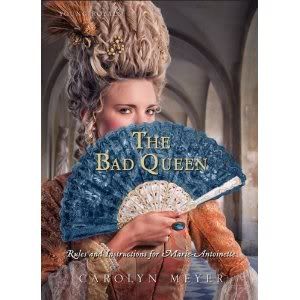
The Bad Queen by Carolyn Meyer


From the moment she was betrothed to the dauphin of France at age fourteen, perfection was demanded of Marie-Antoinette. Desperate for affection and subjected to constant scrutiny, this spirited young woman can’t help but want to let loose with elaborate parties, scandalous fashions, and even a forbidden love affair. Meanwhile, the peasants of France are suffering from increasing poverty and becoming outraged. They want to make the queen pay for her reckless extravagance—with her life.

(Amazon.com)

Genre: historical

Rating: 5/5

Note: #5 for the YA Historical Fiction Challenge, #6 for the YA Series Challenge (Young Royals)

This is a brilliant historical fiction. Not only is the story engaging, but the history is solid and you quickly become sympathetic for Marie-Antoinette, a woman who had many flaws, but whose death and subsequent character assassination were completely undeserved. She was a frivolous woman and spend thrift, yes, but she never deliberately hurt any one and was really only the product of her upbringing and general unhappiness. Meyer makes this book not only accurate, but a really good read. Marie is easy to connect to, as her charm as well as her flaws come shining through. Had she been queen to another country or married to another man she might have been happy, but she was caught in the wrong country at the wrong time and made the scapegoat for many of the political and economic issues in France.

This is an excellent book about a woman who tried to be a good queen, but couldn't make her people happy and whose unhappiness led to her frivolous ways. A woman who was beautiful and charming, but who was also insecure and lonely.


Wednesday, August 3, 2011

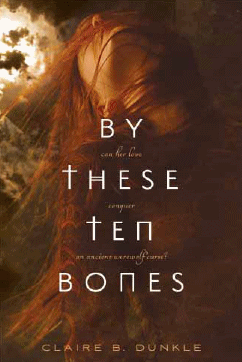
By These Ten Bones by Claire Dunkle


Maddie lives in a feudal Scottish village with a nearly abandoned castle by a loch. After an itinerant old man, Ned, accompanied by a mute woodcarving boy, stops to trade for a time, her nightmares of bones and ruin are soon followed by a mysterious attack on the boy, Paul, who is found bleeding, raked by claws, and feverish. The villagers attribute the attack to the Water Horse, which is believed to rise from the loch to wreak havoc periodically. Maddie eventually pierces Paul's silence, which is voluntary, and his secret, which is not.

(Amazon.com)

Genre: supernatural; historical

Rating: 4/5

Note: #4 of the YA Historical Fiction Challenge

A rather quick and direct read, I've become accustomed to Dunkle's writing style after reading her Hollow Kingdom series. Dunkle tends to write very passive male characters, and this book is no different. Paul is just there as sort of a catalyst and really does nothing on his own. Maddie is the proactive part of the relationship, though it's not an irrational situation considering there are very few marriageable men in the town and it is at least believable that a single male, no matter how odd or personality deficient he may seem would garner attention. The historical aspect of the book is very nice. Everything isn't clean and comfortable, living at this time was hard and filled with superstition, which is very evident here. Life is fairly cheap and death is just sort of accepted. The werewolf part of the novel was a different take on werewolves, as it actually sort of tried to tie them into reality a little. It was at least something different. So on the one hand this was a rather superficial novel, but that didn't make it bad.

Monday, July 11, 2011

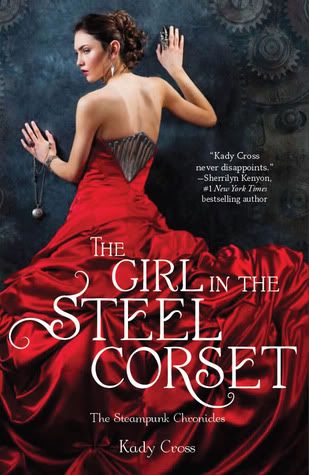
The Girl in the Steel Corset by Kady Cross


In 1897 England, sixteen-year-old Finley Jayne has no one…except the "thing" inside her.

When a young lord tries to take advantage of Finley, she fights back. And wins. But no normal Victorian girl has a darker side that makes her capable of knocking out a full-grown man with one punch….

Only Griffin King sees the magical darkness inside her that says she's special, says she's one of them. The orphaned duke takes her in from the gaslit streets against the wishes of his band of misfits: Emily, who has her own special abilities and an unrequited love for Sam, who is part robot; and Jasper, an American cowboy with a shadowy secret.

Griffin's investigating a criminal called The Machinist, the mastermind behind several recent crimes by automatons. Finley thinks she can help—and finally be a part of something, finally fit in.

But The Machinist wants to tear Griff's little company of strays apart, and it isn't long before trust is tested on all sides. At least Finley knows whose side she's on—even if it seems no one believes her.

(from Amazon)

Genre: fantasy; steampunk; history

Rating: 2/5

Note: #3 for the YA Historical Fiction Challenge; 1 Read-a-Thon book

Abandon all hope, ye who avoid spoilers. This book I had such high hopes for and it let me down so hard, so allow me to vent. Look at that beautiful cover. Hear how intriguing that title is. I know everyone says not to judge a book by its cover, but I do and hard. I think books should be visually appealing as well as well written. By that standard of things, this book is gorgeous. Unfortunately for me it was all downhill from there.

It's not that Cross is a bad writer. She's not. There's none of the clunkiness that is sometimes a problem in sentence structure. Her problem is characters and plot. And for me, who has always very much been fixated with character writing, that's a problem. The main protagonist isn't bad. Finley is a pleasant character, though her guilt over things (specifically Sam, which I will get to) makes no sense. Griffin is what we called in fanfiction writing, a Gary Stu, or a male character who has no flaws whatsoever. He doesn't as he's handsome, intelligent, caring, talented, I'm sure he could probably sing and dance. Interestingly, he's not the worst character problem to me. That honor is a tie between his aunt Cordelia and best friend Sam. Cordelia maybe gets away with her character problems better. She's arrogant, snobby, and elitist. She makes Finley's life miserable for no other reason than that she didn't trust Finley's father. Yet I got the impression that you were supposed to forgive her this behavior because she was "doing it to protect Griffin". That's nice and all, but she's still a jerk who we are implied we should like for no real good reason. Sam is the greater problem. There's no reason to like him. At all. Other than the characters seem to like him for some unfathomable reason. He's a jerk. All he does in the book is mope around about the fact he has mechanical parts and was "brought back to life when he didn't want to be". He manages to stupidly give up every secret about his friends. He's never grateful his friends saved his life. Worst, he attacks Finley and tries to kill her. He punches her several times and tries to strangle her and really isn't all that sorry about it. Yet all his friends are "oh the poor thing". I'm sorry, no. Not a poor thing. He beat up a woman, the very thing one reviled side character did. And he's also the main romantic interest for the rather likable Emily, so we're supposed to LIKE him.

And then there's the "mystery" of what the Machinist is up to. One of my favorite movies when I was little was The Great Mouse Detective. I loved it. The plot revolved around the evil Ratigan trying to build an automaton Queen Victoria and replace the real one with it. THIS BOOK HAS THE SAME PLOT. I seriously kept expecting the Machinist to be revealed to be a sewer rat.

So, this book wasn't poorly written technically, just to me, very poorly conceived.
Monday, July 4, 2011

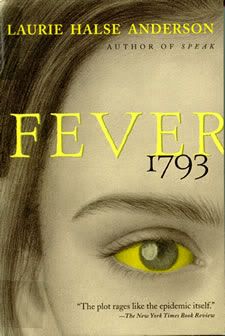
Fever 1793 by Laurie Halse Anderson

Mattie is just another citizen of Philadelphia, feeling like she has too many chores and a mother who doesn't appreciate her when a yellow fever epidemic strikes the city and Mattie becomes separated from her mother. Forced to grow up quickly, Mattie starts having to make decisions while the fever continues to rage through the city and people turn on each other as death stalks the summer.

Genre: historical

Rating: 4/5

Note: #2 for the YA Historical Fiction Challenge

Considering Anderson is a fairly well respected YA author, it was no surprise that this was an excellent historical fiction. Forced with some very adult choices, Mattie is a believable heroine as she tries to survive in a time when there was literally no understanding about what caused yellow fever. This was a disease that not only killed people, but to those at the time it seemed to have no logical pattern since it wasn't understood that it was mosquito transmitted. The inhuman things people do to each other in the face of panic is shown in the novel. Clearly this isn't an issue that has happened very recently in America, but there is always the possibility of epidemics anywhere in the world and the fear shown during this one is understandable.

Sometimes the events in the novel lead you to realize that Mattie was very lucky, but it doesn't take away from the impact of the novel. Her mother is portrayed a bit harshly at the beginning and sometimes things seem to work out just a bit too nicely, but the historical aspect of the story is very well researched and done in an interesting way. In a world gone crazy, Mattie's actions often seem rational and her confusion is understandable. Anderson has taken a neglected historical event in US history and made a tightly plotted historical novel which would be enjoyable for not only history buffs, but anyone looking for a good read.

Saturday, July 2, 2011

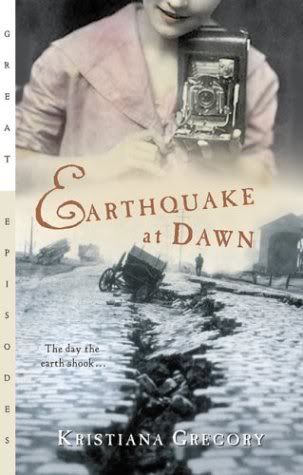
Earthquake at Dawn by Kristiana Gregory


Photographer Edith Irvine and her assistant, Daisy Valentine have the bad luck to arrive in San Fransisco in 1906 right as one of the most disastrous earthquakes in the United States happens. Separated from Edith's father, the two young women struggle to get by with the rest of the survivors as aftershocks rock the city and fires rage. Edith determines to document the tragedy with pictures, even though taking them could get her shot as martial law reigns in the city.

Genre: historical

Rating: 2.5

Note: #1 of the YA Historical Fiction Challenge

This book was disappointing. On the one hand it was excellently researched and posed a first hand account of a natural disaster that I haven't seen much fiction about. On the other hand, there were plot holes, sketchy logic from characters, and several annoying cliches that plague "eyewitness" types of historical fiction sometimes.

The book stands out in the amount of research the author obviously spent looking into the earthquake itself and events surrounding it. There are even pictures from the tragedy in the book. It's interesting to note that looking at them and in reading what went on I was reminded of natural disasters today and how the reaction and handling of them are really not much different. Gregory was able to capture the absurdity of some of the things that happen in a disaster. Unfortunately the plot felt like it was jumping around and skipping from one topic to another when it came to the women, so much so that it was sometimes hard to figure out why they'd left the safety of their camp this time and why they kept wandering around in dangerous areas of the city. There was also the issue that Edith did not seem 22, either in speech or in actions sometimes. She seemed like girlish friends with Daisy, who was only 15, something I assume the author was trying to do because Edith was a real person and working her into a YA novel would involve her being more accessible to younger readers. There was also the lack of logic characters used. Edith's father was revealed to have left San Fransisco under the impression that the girls had gone back home, but then he never goes back to look for them, people keep wandering in areas where fires are for reasons I still can't figure out, characters do irrational things and no one seems to question them. There is also the annoying issue that the book falls into the trap of having the characters meet up with every famous historical figure that may have been through the quake, from Jack London to Enrico Caruso to a Barrymore.

I would have rated the book lower save for the obvious historical research that went into it.

Friday, July 1, 2011

YA Bliss: YA Historical Fiction Challenge

I got a late start on this one, but I'm going to participate in the YA Bliss YA Historical Fiction Challenge. I should be aiming for the Level 1 challenge considering how late I signed up, but no, I'm going for Level 3.

YA Historical Fiction Challenge